Stuck in the Corner: The Premier League’s Least-Loved Prop Is Still Running the Show
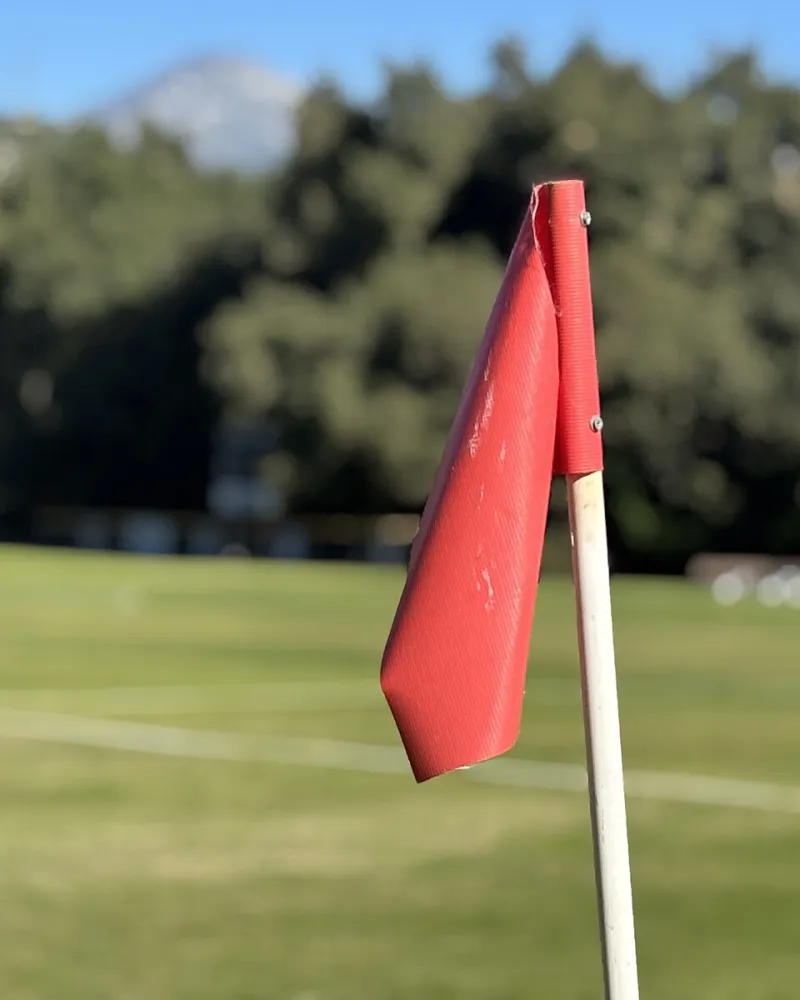
Photo: Pksois23, CC0, via Wikimedia Commons
Ninety-third minute. A corner. The ball is doing that slow, deliberate dance towards the quadrant while 3,000 away fans behind the goal are trying to put off a bloke who has taken roughly four touches all afternoon. And there, at the edge of the frame, is the corner flag: wobbling slightly, catching the floodlights, doing absolutely nothing of consequence. Or is it?
The corner flag is the Premier League’s most ignored matchday prop until it becomes the only thing anybody can see. It is a piece of sponsored plastic and fabric that survives 90 minutes of being sprinted past, leaned on, shouted at and occasionally flattened by a steward trying to retrieve a ball. It is also a small, weird window into how modern matchdays actually run.
The least glamorous job on the matchday checklist
Corner flags are not really a matchday story until they are missing. The routine is usually handled by groundstaff long before the warm-ups: bases checked, poles cleaned, sponsor sleeves rotated so the branding faces the main camera, spares kept somewhere near the tunnel because someone always finds a way to snap one. At some grounds the flags are telescopic; at others they are stubborn one-piece jobs that look like they have been in service since the old First Division. Either way, the person responsible is not a set-piece coach. It is the same team who sweep the touchline, test the goal nets and drag the portable dugout covers into place.
That is the first thing to understand about the corner flag. It belongs to the groundstaff, not the tactics board. The fourth official might check the technical areas, the referee might glance at the quadrant, but the flag itself is part of the stadium’s choreography. It has to be there, it has to look right on television, and it has to survive a Premier League winger sliding into it at full speed.
A sponsor in the dirt
In 2026-27, the corner flag is also advertising space that spends half its life in the dirt. Club partners want visibility, and the corner flag offers something oddly valuable: a fixed point in the frame at every attacking corner. It is not a LED board or a shirt sleeve, but it is there, in shot, next to the near-post defender and the bloke in the front row who has been on his phone since kick-off.
That is why the branding matters more than fans think. If the sleeve is on back to front, someone in the commercial team will notice. If the flag is leaning like a pub garden umbrella, it looks scruffy. If a player picks it up and waves it about after a last-minute equaliser, the sponsor gets a split-second of chaos-based exposure. The corner flag is a tiny billboard that nobody audits until it goes viral.
The tactical nuisance nobody logs
Players have a strange relationship with the corner flag. Goalkeepers use it as a reference point for their angles. Wingers use it as a marker for the byline. Centre-backs pretend not to notice it while backing into it. And at least once a season, someone will try to move it, lean it, or stand it back up in a way that suggests they have never read the Laws of the Game and never intend to start now.
In reality, the flag is not a tactical tool. You cannot shift it to improve your corner angle. But the ritual around it is pure theatre. A player will jog over, straighten the pole, wipe the base with his boot, take an extra breath. A goalkeeper will complain that it is in his eyeline. A steward will stand it up after a collision and give it a little pat, like a dog that has fallen over in the park. None of this shows up in the expected-goals model, which is probably for the best.
Who pockets a corner flag?
This is the question that separates the romantics from the realists. Actual Premier League corner flags are not easy to pocket. They are usually too long, too grubby, and too closely watched by the same stewards who have been staring at the same 30 square metres for two hours. The souvenir economy is more likely to involve the smaller fan-zone flags, a promotional giveaway, or a junior club flag bought for £8 in the club shop.
But the temptation is understandable. A corner flag is a proper piece of matchday furniture. It has been there for the goals, the rows, the last-minute corners and the full-time whistle. If you have ever watched an away end celebrate a 96th-minute winner and seen a steward quietly retrieve a flag from the advertising hoardings, you have seen the real corner-flag economy: not theft, just mild chaos management.
Ranking the 2026-27 corner-flag chaos
A light ranking, because this is not a serious scientific exercise.
-
The injury-time collapse. A corner is swung in, bodies collide, and the flag goes down like a two-bob deckchair. The referee does not care. The goalkeeper cares deeply. The home crowd boos the flag, which is a new low.
-
The away-end unscrewing attempt. A fan in the first row decides the base is loose and gives it a go. A steward appears with the speed of a man who has been waiting all afternoon for exactly this.
-
The goalkeeper’s eyeline complaint. A keeper spends 20 seconds moving the flag half a centimetre, then concedes from the corner anyway. Beautiful stuff.
-
The sponsor sleeve facing the wrong way. Half the stadium does not notice. The commercial team notices. The commercial team always notices.
-
The player who carries it to halfway. Usually after a scrap, occasionally after a goal. Always looks like a man who has just won a minor prize at a school sports day.
The flag stays in the frame
The corner flag will never get its own chant. It will never be the subject of a tactical breakdown on Monday Night Football. But it is part of the matchday ritual all the same: checked by groundstaff, sponsored by somebody, knocked over by a defender, and occasionally rescued by a steward who has already had a very long afternoon. In a league that loves to measure everything, the corner flag remains gloriously unmeasured. Long may it wobble.