Ballot Boxed: The Hidden Arithmetic of Premier League Membership Schemes in 2026-27

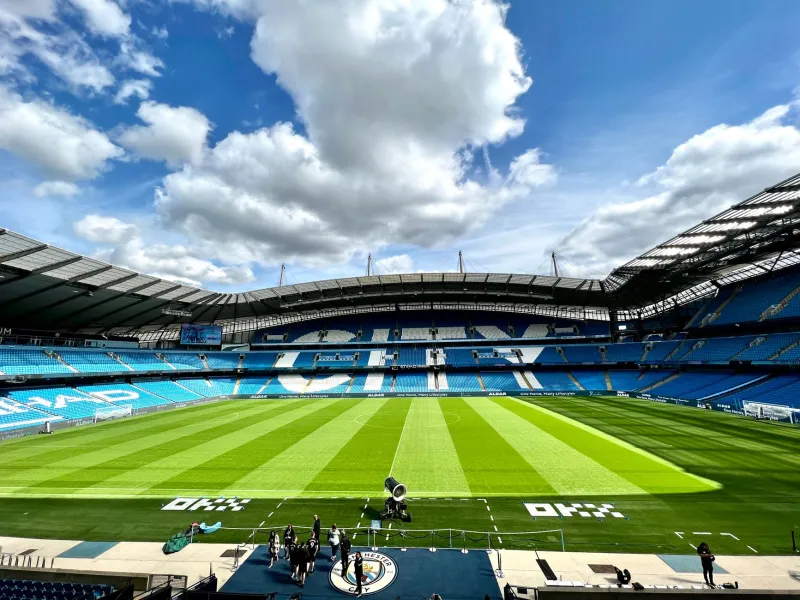
Photo: Ank Kumar, CC BY-SA 4.0, via Wikimedia Commons
Every August, tens of thousands of Premier League fans pay for the privilege of maybe buying a ticket. That sentence should be enough to make you put the kettle on and stare out of the window for a minute. Membership schemes were sold to us as a fairer way to allocate seats. In 2026-27, many of them are a lottery wrapped inside another lottery — with a subscription fee at the door.
Let’s start with the arithmetic nobody puts on the marketing page.
The membership fee is just the ante
A membership is not a ticket. It is a raffle ticket for the right to buy a ticket. Prices across the Premier League typically run from £25 to £70 for adults, with junior deals often cheaper. Some clubs bundle a scarf, a digital programme, and a “priority window” that sounds like a VIP pass but is really a queue position.
Suppose you pay £45 for membership. You enter a ballot for a category B home game. The club says demand is high; your ballot success rate, if published at all, is 12%. If you win, you pay £50 for the seat. Your effective cost for that one match is not £50. It is £50 plus the £45 membership divided by your 0.12 chance of success. That is £50 + £375 = £425. For one ticket. Even if you enter ten ballots and win one, the maths only improves because you have spread the fee — and you have still paid £45 for the chance.
This is the membership mirage: the fee disappears into the club’s revenue line, while the fan carries all the risk. The club gets paid whether you get a seat or not. You get a lanyard and an inbox full of offers.
Loyalty points are inflating like a bad currency
The other half of the illusion is loyalty points. The idea is simple: go to games, earn points, climb the ladder. In practice, points have become a currency that only ever devalues. Thresholds rise because the same pool of tickets is chased by more members. A seat that needed 15 points a few seasons ago might need 22 now. Fans who started going in the 2010s are sitting on a mountain of points; newcomers are staring at a wall.
Some clubs have tried to fix this with tiers, ballots for away games, and points caps. Others have quietly let the system drift. The result is a closed shop dressed as a meritocracy. If you are 19 and trying to build a habit of going, you are competing against people who have been stockpiling points since before you did your GCSEs. That is not loyalty. That is inheritance.
The ballot odds nobody publishes
Here is the question every supporter should ask before renewing: what are the actual odds? A few clubs publish ballot success rates by match category. Most do not. They publish “high demand” and “limited availability” and a colour-coded calendar that tells you nothing.
The clubs that do publish numbers deserve credit, because transparency is the first step to fair value. If you know a category A game has a 4% success rate and a category C game has a 40% success rate, you can make a rational choice. If you know nothing, you are buying a scratchcard with a football crest on it.
Fair value is not about being the cheapest. It is about the relationship between the fee and the access you actually get. A £30 membership with published odds and a decent junior price is better than a £60 membership with a glossy app and a black box. The best schemes tend to have three things: a low entry fee, clear ballot data, and a points system that does not punish new fans. A handful of clubs — Brentford, Brighton, and Fulham have all had decent reputations among supporter groups for communication — show that it can be done without turning the turnstiles into a private members’ club.
The lottery within a lottery
The deeper problem is that membership ballots are only one layer. Away tickets have their own allocation and their own points thresholds. Cup schemes are another upsell. Ticket resale platforms are another queue. A fan who wants to follow their team home and away is not buying one lottery ticket; they are buying a season-long raffle book.
And the costs stack. Membership. Ballot entries. Travel. The ticket itself. The £30 away cap helps with the last item, but it does nothing about the membership fee you paid in July to have a chance of using it. The real damage to your wallet starts before the fixture list is even out.
What fair value would look like
A fair membership scheme would tell you the odds. It would cap the fee at a sensible level relative to the cheapest ticket. It would protect a share of tickets for new fans and young fans. It would make junior memberships genuinely cheap. It would not auto-renew you into a second year of hope.
Until then, supporters should do the maths themselves. Work out your personal cost per successful ticket. If you enter five ballots, win one, and pay £45 for membership plus £50 for the seat, your effective ticket price is £275. That is the number to compare across clubs. It is also the number clubs would rather you did not calculate.
The membership model is not evil. It can be a fair way to manage demand. But in 2026-27, too many schemes are a lottery within a lottery — and the house always takes its cut before the first ball is drawn.