Spare Hands, Long Shadows: The Premier League’s Backup Goalkeeper Economy
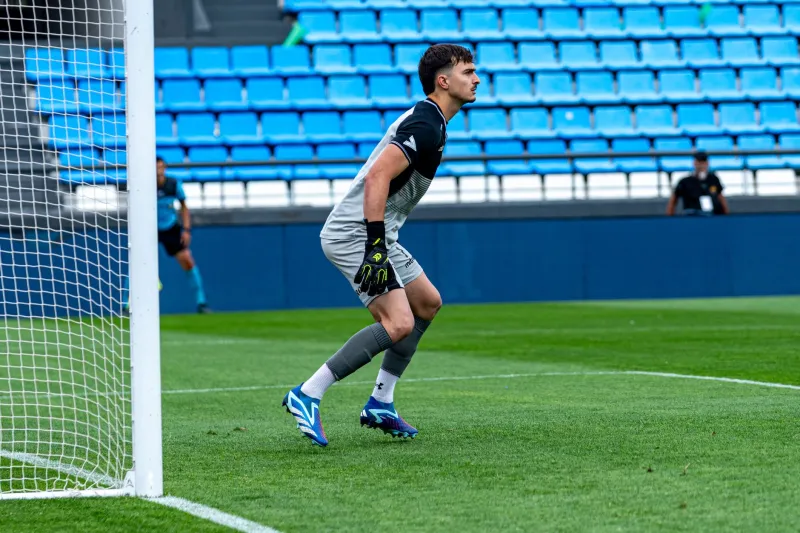
At 2.59pm on a Saturday, the Premier League’s most ignored ritual takes place. The No.1 jogs out to a roar. The No.2 follows a few yards behind, gloves already on, and spends the next 20 minutes catching volleys from a goalkeeping coach before taking a seat that is designed to be uncomfortable. For the next 90 minutes, his job is to be ready for a moment that probably will not come. It is the strangest role in football, and in 2026-27 it is also a proper economy.
The warm-up that never ends
Fans notice the backup goalkeeper in three situations: a red card, a hamstring, and a pre-season friendly stream that buffers every 30 seconds. The rest of the time he is a silhouette in a training top, clapping the away end and fetching water. But the job is not passive. The No.2 has to be warm without being loose, switched on without being twitchy, and socially useful without being a threat to the No.1. He is part athlete, part insurance policy, part coach’s mate.
Ask anyone who has done the job and the same themes come back. You train harder than people think. You travel every week. You play less than the mascot. And you spend a lot of time reading the No.1’s body language, because your entire season can turn on his hamstring.
A market of almost-players
Clubs do not shop for backup goalkeepers like they shop for wingers. A No.2 is not usually signed to start. He is signed to solve a problem: homegrown quota, wage structure, succession planning, or the simple fear of playing a 19-year-old in a relegation six-pointer because the first-choice keeper rolled his ankle in training.
That makes the position weirdly inefficient. A club will spend £40m on a midfielder who might play 2,000 minutes, then hand the goalkeeping backup role to a free transfer because the market says No.2s are worth less. The logic is understandable — you only need one keeper on the pitch — but it creates a strange labour market. The best No.2s are often not the best goalkeepers. They are the best employees: low maintenance, high concentration, and happy enough to be nearly invisible.
Profit and sustainability rules have sharpened the thinking. Squads need depth, but not expensive depth. A £5m steady 30-year-old who knows the league can be better value than a £15m prospect who needs games. And if the No.1 is durable, the No.2’s value is not measured in saves. It is measured in the absence of panic.
The loan carousel
The backup goalkeeper economy is kept alive by loans. A 22-year-old No.2 cannot develop by catching crosses in front of 300 people at the training ground. He needs shots, chaos, and a crowd. So clubs send him to the Championship, League One, or abroad, usually with a January recall clause and a lot of crossed fingers.
It is a odd career path. A keeper can be third choice at a Premier League club, first choice at a League One club, and back to third choice in the space of eight months. The loan carousel keeps him match-fit and visible, but it also keeps him unsettled. Every summer is a new flat, a new goalkeeping coach, a new set of defenders whose names he learns in pre-season. The reward is a career. The cost is a life that fits in a holdall.
The Owl’s 2026-27 backup table
Judging these situations is not about reputation. It is about three questions: Is the No.1 durable? Does the No.2 have a realistic route to games? And if the No.1 goes down in November, does the season wobble or hold? With that in mind, here is the unscientific but deeply felt Owl ranking.
Best situations
Brighton. The pathway is visible. Brighton treat goalkeepers like a production line rather than a lottery, and the No.2 knows whether he is being developed, loaned, or kept as cover. Clarity is underrated in this job.
Brentford. The recruitment is calm and the squad logic is usually coherent. A backup keeper at Brentford feels like a deliberate signing rather than a panic buy on deadline day. That matters when the No.1 takes a knock.
Crystal Palace. A settled No.1 and a No.2 who has actually played men’s football is a sensible combination. The drop-off is not theoretical. It is manageable.
Worst situations
West Ham. The gap between first choice and backup has felt like a hope strategy rather than a plan. If the No.1 misses a month, the mood around the club changes very quickly.
Everton. Too much depends on the No.1 staying available. The cover is experienced enough to be reassuring on paper, but the lack of recent first-team rhythm is the kind of thing nobody notices until it is 1-0 in the 88th minute and the ball is swinging in.
Wolves. A loanee as cover is fine until the parent club wants him back or the player starts thinking about his own pathway. Emergency goalkeeping is not a strategy. It is a fire drill.
The human cost
The No.2 is not a punchline. He is a professional who has to stay ready for a job that might last 12 minutes all season. He has to warm up without sulking, sit down without switching off, and celebrate a win he did not influence. When the No.1 makes a mistake, the cameras find the bench. When the No.1 makes a save, the bench claps.
So next time the second goalkeeper warms up in front of the away end, give him a nod. He is the loneliest number in the squad, the spare hand in the glove drawer, and the reason a season does not collapse when the first-choice keeper pulls up. The Premier League’s backup goalkeeper economy is not glamorous. But it is the difference between a plan and a panic.