Your Fortress Has a Booking Calendar: The Premier League Stadium’s Other Life
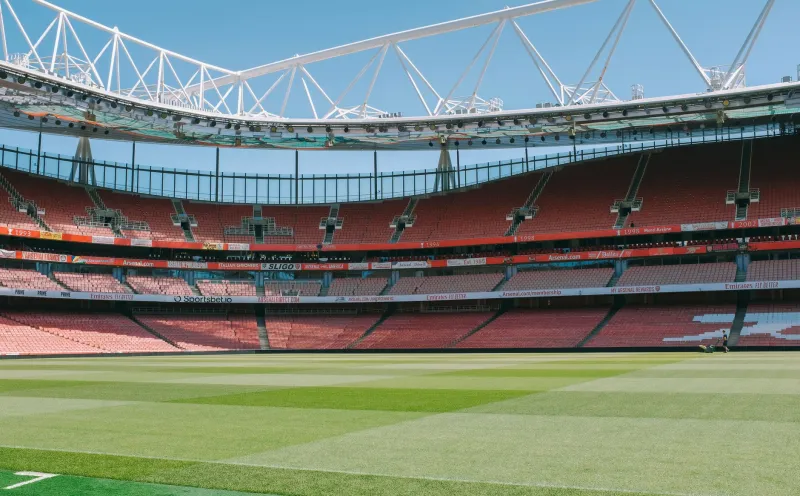
There is a version of your club’s stadium you never see. It has no scarves tied to railings, no concourse queues, no pre-match playlist battling a nearby pub. On a wet Tuesday in November, the same bowl that holds 60,000 people on a Saturday might be hosting a software conference, a corporate awards dinner or a film crew trying to make a corner flag look cinematic. The pitch is roped off. The dressing room is a breakout space. The stands are empty enough to hear a trolley squeak.
That is not a betrayal of matchday. It is the reality of a Premier League stadium in 2026: a very expensive piece of concrete that has to earn its keep far beyond the 19 or so home league fixtures it stages each season. The question is not whether clubs should hire out their grounds. They already do. The question is what happens to the idea of home when the fortress starts taking bookings.
The Tuesday test
A stadium’s commercial diary is now part of its identity. Tottenham Hotspur Stadium was built with the NFL and concerts in mind; the London Stadium has long been a multi-purpose site; Anfield and the Emirates have welcomed music crowds; Old Trafford and countless others sell conference space, tours and hospitality packages that have nothing to do with a 3pm kick-off. Even clubs without a retractable pitch or a concert-grade roof can flog a suite, a restaurant or a car park.
The best operators treat this as a 365-day business. They have sales teams, event calendars and partnerships that turn a football ground into a venue with a postcode and a brand. The less sophisticated ones treat it as a side hustle: a few weddings in the summer, a pre-season friendly, maybe a darts exhibition. You can usually tell the difference by walking past the stadium on a non-matchday. Is there a sign advertising something? Is the club shop open? Is the place alive or just locked?
Concrete that pays
This matters because stadiums are not cheap ornaments. They are assets with maintenance bills, safety certificates and mortgage-style obligations. A club that can fill a bowl with conferences on a Wednesday is a club with another revenue stream. In a world of profit and sustainability rules, every hired hall counts. The commercial creep is not some shadowy conspiracy; it is the logical response to a building that would otherwise sit dormant for most of the year.
But there is a trade-off, and it is not always financial. When a stadium becomes a venue, the club has to decide which version of itself it is selling. A concert crowd wants bars, transport and a big stage. A conference crowd wants Wi-Fi, parking and a decent lunch. A matchday crowd wants noise, rivalry and the feeling that the place belongs to them. Those three customers do not always want the same things.
The atmosphere ledger
The obvious fear is that commercial use dilutes atmosphere. In practice, it is rarely that simple. A stadium does not lose its edge because a wedding fair happened in the function room. It loses its edge when the people running the place start treating fans as one customer segment among many — and a slightly awkward one at that. You can feel it in the little things: a sterile PA, a hospitality-first layout, a concourse that feels more like an airport terminal than a football ground.
Still, there is an upside. Money from non-matchday events can help fund the squad, the academy or the women’s team. It can keep ticket prices from rising quite as fast as they otherwise might. It can make a club less dependent on a single revenue stream. Fans who demand ambition from their board cannot entirely ignore the fact that ambition needs a balance sheet.
The honest position is that the stadium is no longer just a football ground. It is a club’s biggest physical asset and its most visible brand statement. The trick is to hire it out without hollowing it out.
Who gets the keys?
Community use is where this story gets more interesting. A Premier League ground can host school sports days, food banks, charity events and local meetings. That is not just PR. It is a reminder that a stadium sits inside a town or a city, not above it. The clubs that do this well tend to be the ones that understand their ground has a public life as well as a private one.
But there is a pecking order. Corporate clients get the carpeted suites. Fans get the ballot for tickets. Local groups get the dates nobody else wants. That hierarchy is not unique to football, but it is more visible when the building in question is the one you sing about every other week.
The fan question
Should you care that your fortress is also a hireable venue? Probably, but not in the way the angriest voice on the messageboard suggests. You do not need to picket a conference. You do need to pay attention to what the commercial calendar does to the matchday experience: whether the pitch is protected, whether the stands still feel like yours, whether the club remembers that the people who make the noise are not just customers with a cheaper ticket.
A stadium with a booking calendar is not automatically a sell-out. It is just a modern football ground trying to pay for itself. The clubs that get it right will keep the fortress feeling like a fortress even when the lights are on for a software salesman from Slough. The ones that get it wrong will build a venue that happens to host football — and wonder why the atmosphere went quiet.